
[1. What Is It?]
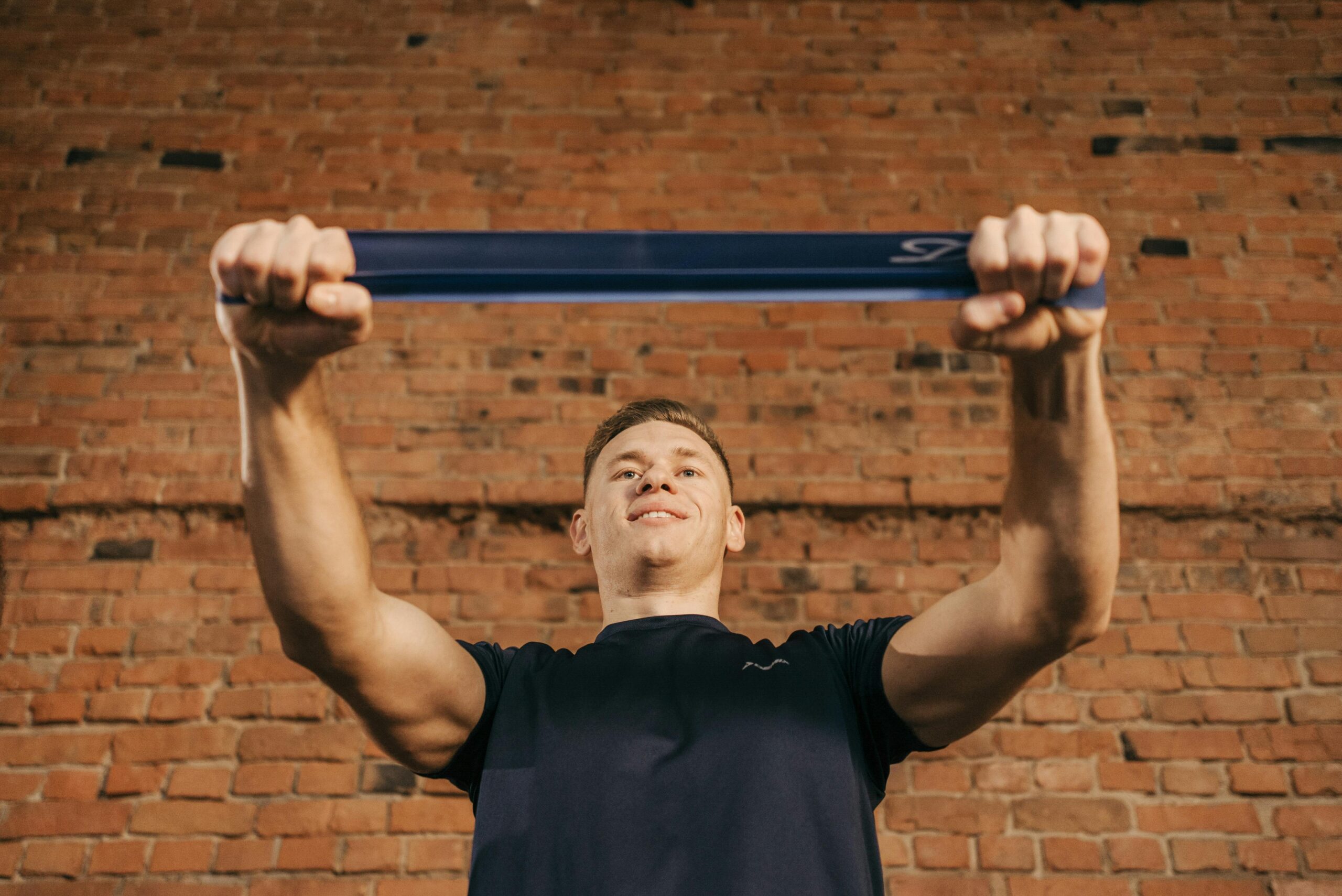
Don’t let the simple look fool you. The best resistance bands for home gym setups aren’t those thin, flimsy strips you see in physical therapy offices. We are talking about heavy-duty “Loop Bands” (or Power Bands). These are continuous loops of thick latex that can provide anywhere from 5 lbs to over 150 lbs of resistance depending on their thickness.
[2. Why You Need It in Your Garage]
When I first started my “Garage Lab,” I thought I only needed iron and steel. I was wrong. Resistance bands are the “Swiss Army Knife” of fitness gear.
- Variable Resistance: Unlike a dumbbell, which is heavy at the bottom and the top, a band gets harder the more you stretch it. This “peak tension” is incredible for muscle growth.
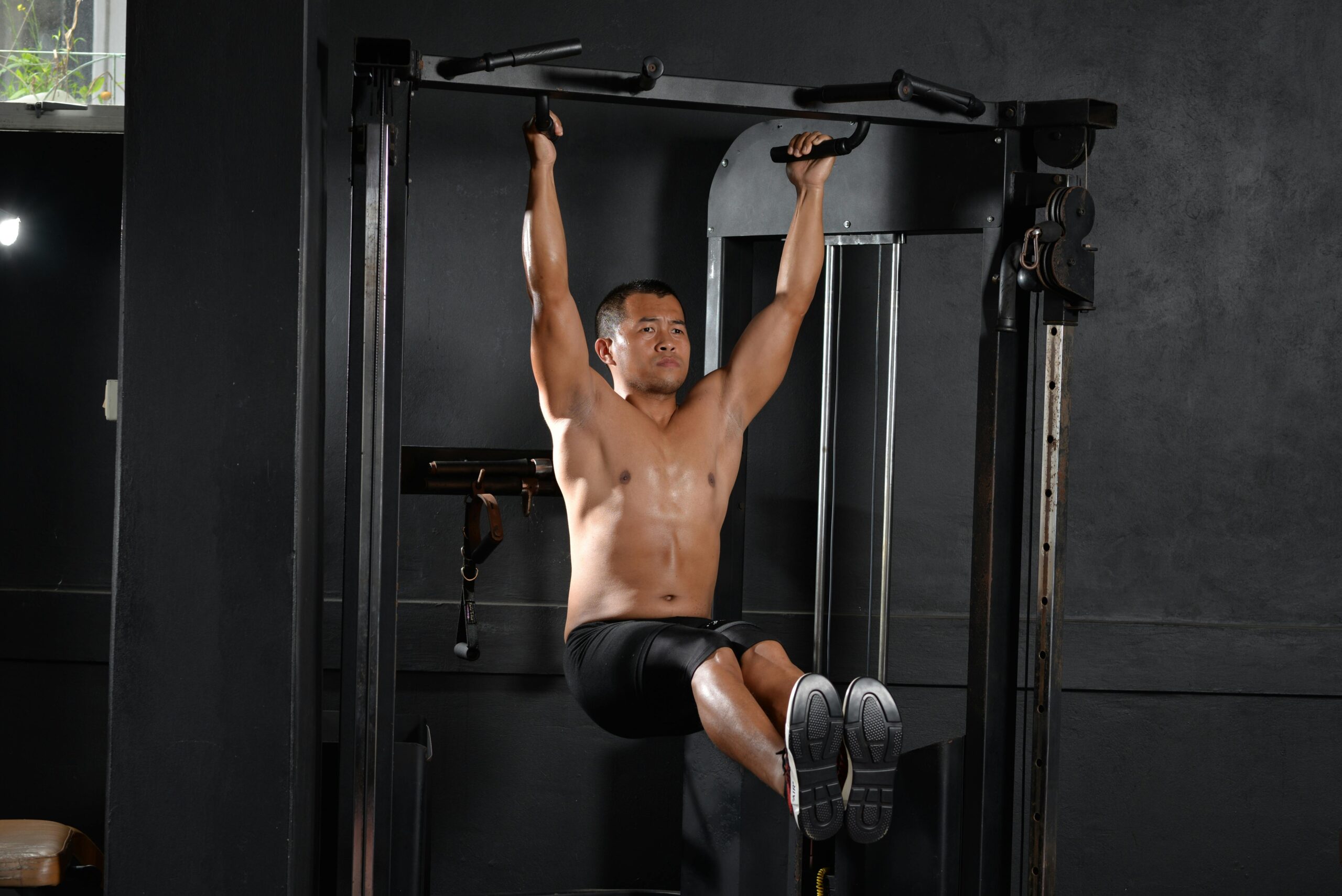
- The Ultimate Assistant: If you followed my last post about pull-up bars but realized you can’t do a full pull-up yet, these bands are your savior. Loop one over the bar, put your foot in it, and it will “lighten” your body weight.
- Replacing Cable Machines: You don’t need a $2,000 cable crossover machine. Bolt a hook to your garage wall, loop a band around it, and you can do face pulls, tricep extensions, and chest flies.
[3. The Different Types: Which Should You Buy?]
When searching for the best resistance bands for home gym use, you’ll see two main styles:
- Loop Bands (My Top Choice): These are the thick, flat circles. They are the most durable and versatile for strength training and pull-up assistance.
- Tube Bands with Handles: These look like jump ropes with grips. They are great for bicep curls or rows, but they aren’t strong enough to help with pull-ups and tend to snap more easily.
[4. Jax’s Lab Advice: Safety First]
I learned this the hard way: Respect the snap. 1. Check for “Nicks”: Before every workout, run your fingers along the band. If you see a tiny tear or a white “stress mark,” throw it away. You do not want a high-tension band snapping near your face. 2. Storage: Don’t leave your bands in the direct sun or a freezing garage corner near sharp metal. Extreme temperatures and UV light make latex brittle. 3. Buy a Set: Don’t just buy one “medium” band. Buy a set of 3 or 5 colors. This allows you to combine them to create exactly the amount of tension you need.
[5. Pros & Cons]
- Pros: Extremely affordable (usually under $50 for a set); portable enough to travel with; adds a unique type of tension that iron can’t match.
- Cons: They eventually wear out and need replacing; it’s hard to track exact weight/progress (is the “Blue Band” 30 lbs or 40 lbs? It’s hard to tell).
[Conclusion: The Garage Gym’s Secret Weapon]
The best resistance bands for home gym training are the ones that actually get used. Whether you use them to warm up your shoulders or to help you hit that first unassisted pull-up, they are an essential part of a modern garage lab.
Next Step: Want to add some serious width to your back without the complexity of bands? Read my next post: [Plate-Loaded Lat Pulldowns: Bringing the Commercial Gym Home].
Leave a Reply